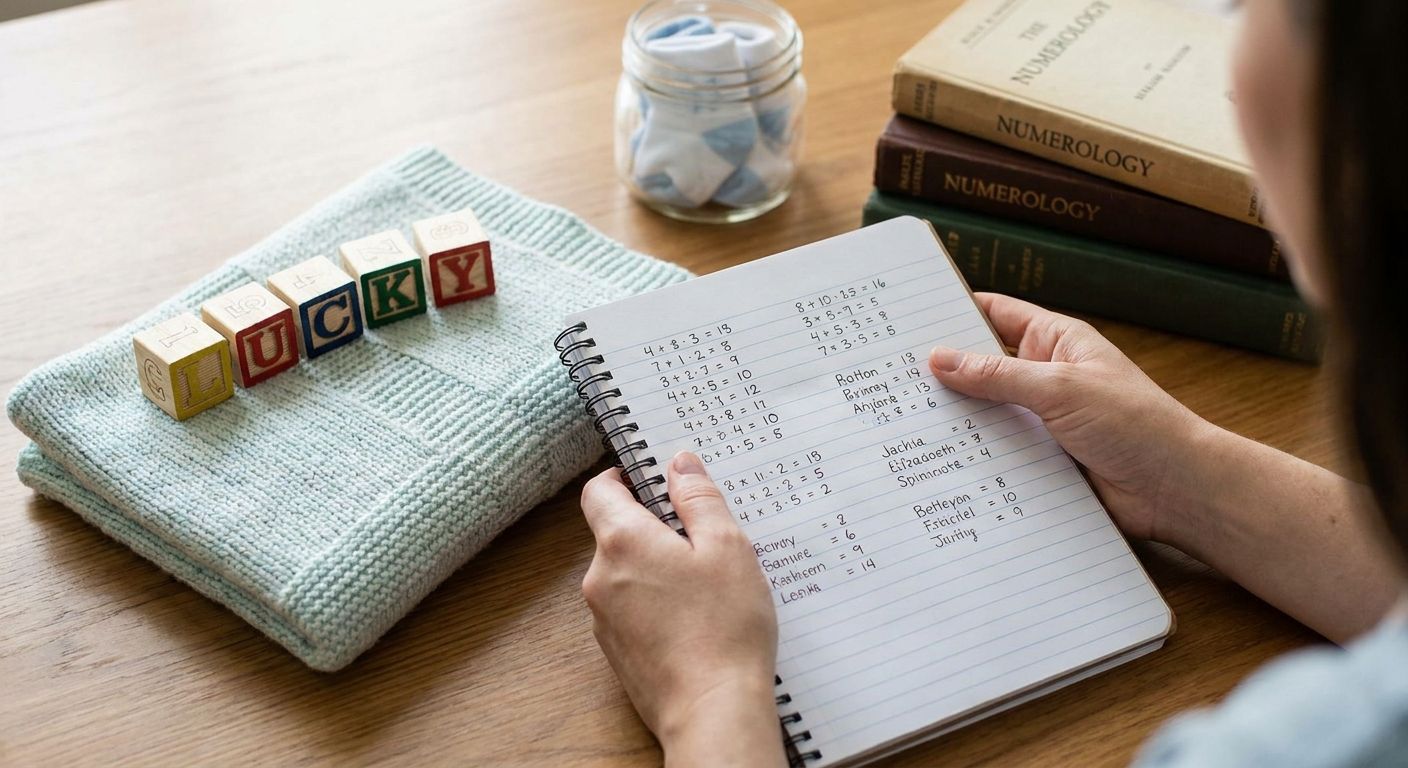
Naming a baby by the numbers means checking a few things at once: the digits in the birth date, the letters in the name, and whichever nakshatra the Moon happens to occupy. This guide sorts the methods worth running for a numerology for lucky baby name search in 2026 from the ones that just repackage a Western system under a Vedic label.
TL;DR
- Run the mulank (birth number) against the name number first; it takes under a minute and needs only a birth date.
- Nakshatra-syllable naming is the traditional pick for a naming ceremony (naamkaran), not a Western app: Buy.
- Chaldean numerology on the full name is what most Indian numerologists actually use for a numerology for lucky baby name check: Consider.
- Pythagorean-only generators and one-tap 'lucky name' apps skip the chart entirely: Skip both as a lone source.
Why the count and the sound both matter
A name carries two kinds of information: a sound, and a number. Wishastro's free tools can run a quick digit check on both a birth date and a proposed name if you want the raw numbers before reading further, no sign-up needed for a first pass.
Add the digits of a birth date down to a single figure and you get the mulank, or birth number, landing somewhere between 1 and 9. Convert every letter in a full name to a digit using the Chaldean chart instead, and add those down too; that gives a name number between 1 and 8, since Chaldean tradition drops the number 9 from names as too intense to sit safely in daily use. Some families check the two against each other before settling on a final spelling.
Vedic tradition runs a separate check that has nothing to do with digits. Each of the 27 nakshatras divides into four padas, and each pada carries a set of starting syllables tied to that placement. If your baby's Moon falls in a particular nakshatra pada, the traditional naming rule points to a syllable, not a number, though the house, the sign and the running dasha at birth all shape how that placement actually plays out. None of these methods cancels the others; they answer different questions, and a name that satisfies only one of them is only half checked.
Who actually needs this
This is for parents and grandparents picking a name in the weeks around a birth, when a numerologist, a family priest and an aunt with an app all suggest something different. It's for anyone adjusting the spelling of an existing name too, which happens often when a mulank clashes with a name number. If a naming ceremony date is already booked, the faster checks below matter more than the slower ones.
What to look for in a numerology-based baby name
The mulank and the name number should agree, not clash
A wide gap between the two numbers is traditionally read as friction between how a child is born and how the name presents them, so the two figures getting close, or landing in numbers considered compatible with each other, matters more than either number alone.
The starting syllable should match the nakshatra pada, if Vedic naming is the plan
This check depends on an accurate birth time, since the Moon moves through a nakshatra pada in a matter of hours, and getting the time wrong shifts which syllable set applies.
The full name needs checking, not just the first name
A first name can read well on its own and still add up wrong once the surname is attached, since Chaldean and mulank checks both work on the full string of letters a child will actually sign.
Stick to one system through the whole decision
Switching from Chaldean to Pythagorean partway through because the first number didn't feel right just means comparing two different scales as if they were one, which produces a number that means nothing.
Sound and daily use matter as much as the math
A name that scores well on paper but gets mangled by relatives, teachers and the school register every day is failing a test the numerology never checked in the first place.
Which method to actually run
The mulank cross-check, the fast first check. Add the digits of the birth date down to a single number between 1 and 9; a birth on the 14th of a month, for instance, reduces 1 plus 4 to 5 before folding in the month and year. It needs no chart and takes under a minute. Buy: run this first.
Nakshatra-syllable naming, the traditional pick for a naming ceremony. If your baby's Moon falls in a particular nakshatra pada, Vedic tradition points to a set of starting syllables for that placement, apart from any digit. Checking which pada the Moon sits in needs an accurate birth time, which is exactly what Wishastro's guide on kundli matching using date of birth walks through, since the same chart data drives both a naming syllable and a matching score later on. Buy, if a naamkaran ceremony is part of the plan.
Chaldean numerology on the full name, what most numerologists actually run. Convert every letter to a number using the Chaldean chart, add them down to a single digit skipping 9, and the result sits between 1 and 8. It's the version most professional numerologists working in India lean on for a baby name question, more than the Pythagorean version taught in the West. Consider it as the second check, after the mulank.
Pythagorean-only Western generators, the import that skips the chart. Plenty of free numerology sites run a name only through the Pythagorean letter system and hand back a single lucky number with no reference to a birth chart at all. It's a real branch of numerology, just not the one Vedic naming ceremonies were built around, and it misses the nakshatra layer entirely. Skip it as a lone source for a Vedic naming decision.
One-tap 'lucky name' generator apps, the shortcut. An app that spits out a ready-made shortlist from a birth date alone is usually running one calculation, most often a mulank match, and skipping every other check on this list. It's fine as a starting list of ten or twenty names, never as the final word. Skip using it as the only source; treat the output as a first draft.
What looks right but isn't
- Chasing one specific number in a name because it once worked for a cousin, while ignoring what the actual mulank says.
- Trusting an app's star rating or design polish instead of checking which numbering system it actually runs.
- Finalising a name from the first name alone and only later noticing the full name, surname included, adds up differently.
When the mulank and the nakshatra rule point in different directions, that usually means the name needs a proper look at the actual chart rather than another app. You can talk to an astrologer online to weigh a specific name against a specific birth chart, rather than guessing which check should win.
How the methods compare
- Mulank cross-check: needs only a birth date, takes under a minute, Buy.
- Nakshatra-syllable rule: needs an accurate birth time, ties to a naming ceremony, Buy.
- Chaldean full-name number: needs the full spelled name, the version most Indian numerologists use, Consider.
- Pythagorean-only apps: needs just a name, ignores the chart entirely, Skip.
- One-tap generator apps: needs a birth date, gives a shortlist only, Skip.
One last thing
Most families run a numerology check once, on the legal spelling, and never revisit it, but the actual number in daily use often belongs to a nickname instead. Chaldean and Pythagorean calculations both work off whichever spelling actually gets said and written most, so a name that checks out on the birth certificate can carry a completely different number once a shortened version takes over at home, which is worth running through the same check again in 2026 rather than assuming the first pass still holds.