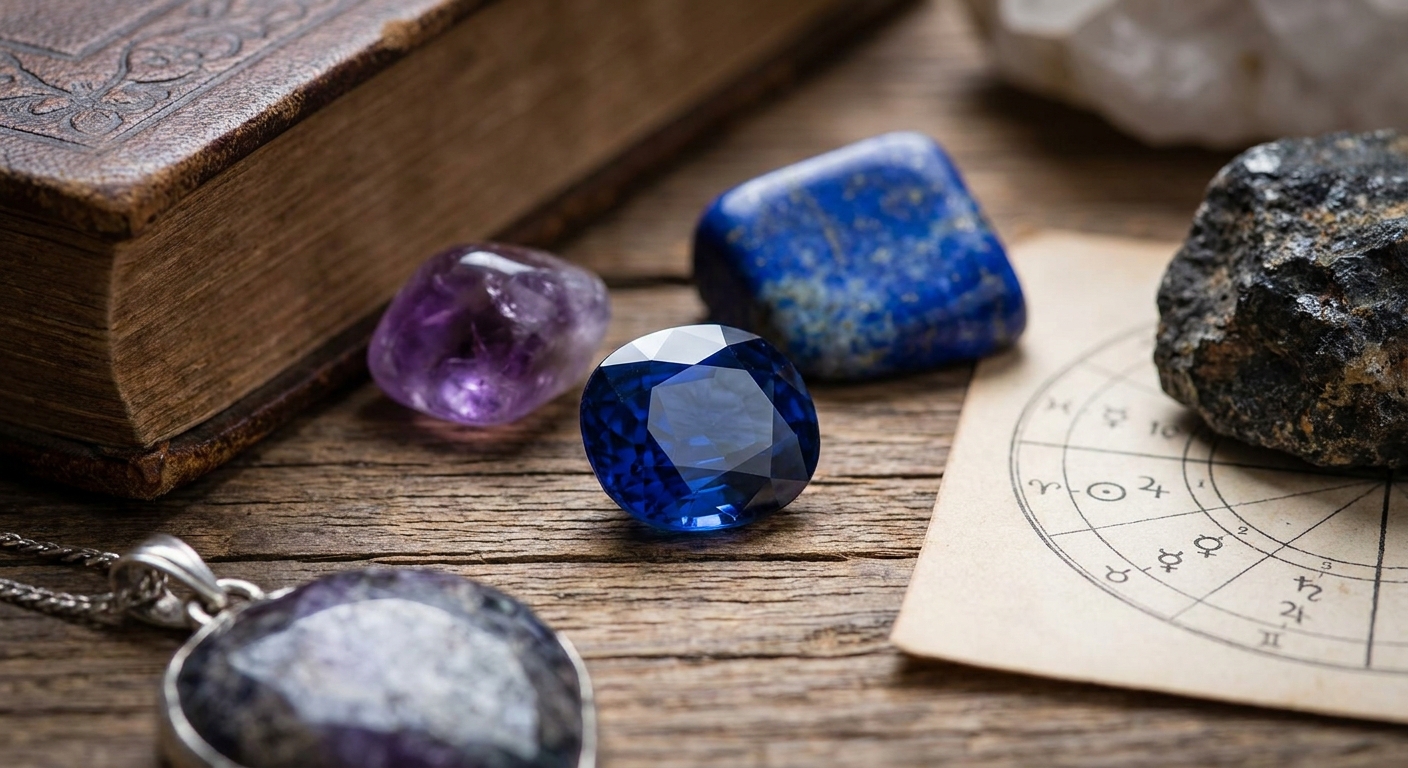
Saturn (Shani) rules discipline, delay, and hard lessons, and when it's afflicted in your chart, gemstone therapy is one of the most requested Vedic remedies in 2026. This guide ranks the real options, from Blue Sapphire to its safer substitutes, so you don't buy the wrong stone for the wrong reason.
TL;DR
- Blue Sapphire (Neelam) tops the best gemstones for Saturn problems list, but test it 3-7 days before setting it permanently.
- Amethyst is the safest substitute for sensitive charts: Buy without the reaction risk.
- Iolite (Kaka Neeli) costs far less than natural Ceylon Neelam and still supports Sade Sati: Buy.
- Hessonite Garnet and Cat's Eye are Rahu-Ketu stones, not Saturn remedies: Skip if a seller calls them Shani stones.
- Sade Sati runs 7.5 years, and a gemstone eases the transit, it doesn't erase it.
Why This Matters
Saturn takes roughly 29.5 years to orbit the sun and enters a new sign only every 2.5 years, which is exactly why its influence feels slow and heavy rather than sudden. If your moon sign falls under Sade Sati (the 7.5-year transit) or Kantaka Shani, career delays, joint pain, and low motivation are common complaints astrologers hear on Wishastro consultations.
Capricorn and Aquarius natives feel Saturn's effects most directly since it rules both signs. If you're checking your Aquarius horoscope today and seeing repeated themes of restriction, that's classic Saturn language, and gemstone therapy is one of three remedies astrologers usually discuss alongside mantra and charity.
Saturn is also debilitated in Aries, so Aries natives going through Sade Sati or a Saturn dasha often report sharper symptoms. Anyone tracking their Aries weekly horoscope during a rough patch should treat gemstone advice as one input, not a fix on its own.
How We Ranked These Saturn Gemstones
This ranking weighs four factors used across classical Vedic gemology texts and modern astrologer practice in 2026: how directly the stone is tied to Saturn in Jyotish tradition, how often it's actually prescribed versus how often it's marketed, the physical testing risk involved, and cost relative to effect. Stones with weak or invented planetary links (a common issue in online gem shops) get marked down regardless of price.
The Ranked List
1. Blue Sapphire (Neelam) — the classic, and the riskiest
Natural Ceylon Blue Sapphire is Saturn's primary gemstone in Vedic astrology, typically prescribed at 4 to 6 carats depending on body weight. It's also the one stone that can backfire fast if your ascendant lord conflicts with Saturn, sometimes producing headaches, anxiety, or financial loss within days of wearing it.
The standard practice is a 3-to-7-day test period as a loose stone or pendant before it goes into a permanent ring setting. If nothing negative shows up, it's set in silver or panchdhatu and worn on the middle finger on a Saturday. Verdict: Buy, but only after the test period.
2. Amethyst — the safe substitute
Amethyst carries a gentler Saturn association and is far less likely to cause an adverse reaction, which is why many astrologers recommend it for first-time gemstone wearers or anyone nervous about Neelam's risk profile. It costs a fraction of natural Ceylon Blue Sapphire per carat.
It won't produce the intensity of a well-matched Neelam, but for someone easing Saturn-related stress rather than treating a severe affliction, that's the point. Verdict: Buy.
3. Blue Topaz — the budget pick with limits
Blue Topaz shows up often in low-cost Saturn remedy kits because it's affordable and visually similar to sapphire. It works for mild, everyday Saturn discomfort like sluggishness or minor work friction.
It does not carry the strength to address a serious Sade Sati or Kantaka Shani period, so treating it as a full replacement for Neelam is where people go wrong. Verdict: Hold, it's a support stone, not a primary remedy.
4. Lapis Lazuli — the historical choice
Lapis Lazuli has centuries of use in Persian and Indian astrological traditions as a Saturn stone, tied to its deep blue color and mineral composition. It's rarely the first recommendation from modern practicing astrologers today, though it still appears in older remedy texts.
If an astrologer specifically confirms it fits your chart, it's a reasonable low-cost option. Without that confirmation, it's a guess. Verdict: Wait for a chart-specific confirmation.
5. Iolite (Kaka Neeli) — the practical Neelam substitute
Iolite is widely used across South India as a budget alternative to natural Ceylon Blue Sapphire, at a fraction of the per-carat cost. It carries a similar violet-blue tone and is commonly prescribed for Sade Sati support when a full Neelam isn't financially practical.
It doesn't carry Neelam's intensity (or its risk), which for most people going through a standard Saturn transit is a fair trade. Verdict: Buy.
6. Black Tourmaline — the Western crossover
Black Tourmaline gets marketed heavily as a "Saturn grounding stone" in Western crystal shops, but it has no real basis in classical Vedic Navratna gemology. It's a grounding stone in Western crystal practice, not a planetary remedy in Jyotish tradition.
If you want general grounding, fine, but don't expect it to address a documented Shani dosha in a birth chart. Verdict: Skip if you're looking for a Vedic Saturn remedy.
7. Hessonite Garnet — the mistaken pick
Hessonite Garnet (Gomed) is Rahu's gemstone, not Saturn's, and it's one of the most common mix-ups buyers make since both are sometimes lumped into "dark stone" remedy kits online. Wearing it for a Saturn problem does nothing for Saturn and can complicate a Rahu-Saturn combination if your chart already carries that tension.
Verdict: Skip for Saturn problems, it's the wrong stone for the wrong planet.
Comparison Table
Stone | Primary Use | Carat Range | Test Period | Cost Tier | Verdict |
|---|---|---|---|---|---|
Blue Sapphire (Neelam) | Direct Saturn remedy | 4-6 carats | 3-7 days | High | Buy (after testing) |
Amethyst | Gentle Saturn support | 3-5 carats | Not required | Low | Buy |
Blue Topaz | Mild Saturn support | 3-5 carats | Not required | Low | Hold |
Lapis Lazuli | Historical Saturn remedy | 3-6 carats | Not required | Low-Mid | Wait |
Iolite (Kaka Neeli) | Budget Neelam substitute | 4-6 carats | 1-3 days | Low-Mid | Buy |
Black Tourmaline | Western grounding stone | N/A | N/A | Low | Skip |
Hessonite Garnet | Rahu remedy (not Saturn) | 4-6 carats | 3-7 days | Mid | Skip |
Where To Buy
Three rules matter more than the stone itself once you decide to buy one.
- Insist on a lab certificate. Any natural Blue Sapphire above 2 carats should carry a certificate from a recognized gem testing lab confirming it's untreated. Treated or synthetic stones don't carry the same astrological weight in classical practice.
- Test-wear before setting it permanently. The 3-to-7-day test period is a genuine Vedic gemology practice, not a sales gimmick, and it's the single best way to avoid an expensive mistake.
- Confirm your Saturn placement first. A wrongly prescribed gemstone can intensify Shani dosha instead of easing it, so getting your dasha timing and Saturn house confirmed before you spend anything matters more than the stone's price. You can talk to an astrologer online for free to walk through your chart before buying.
Confirm Your Saturn Placement First
Talk to an astrologer online before you buy any gemstone.
One Last Thing
The 3-day test rule isn't superstition dressed up as tradition, it's a practical filter that classical Vedic gemology built in centuries before lab certificates existed. If a stone is going to clash with your chart, most astrologers report the signs show up within 48 to 72 hours, not months later, which is exactly why skipping that step is the most common regret buyers report in 2026.