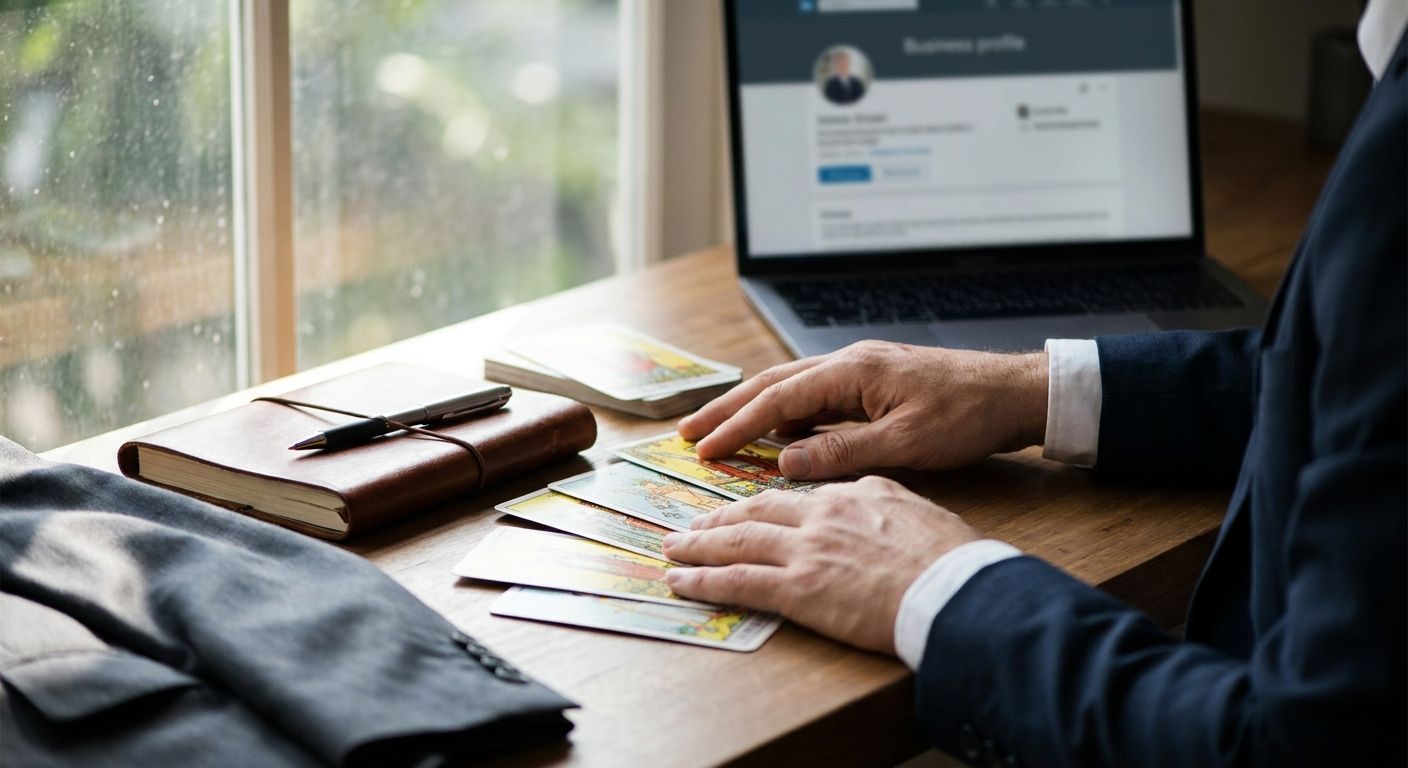
A tarot reading for a job interview works best when you treat it as a mindset check the night before or the morning of, not a verdict on whether you'll get the job. Pick one spread, phrase a question about your own approach rather than the outcome, draw, and write down your gut reaction before you look up any meanings. The part most guides skip: how you interpret the cards on decision day tends to color how calm you walk into the room far more than anything the cards actually say.
TL;DR
- A tarot reading for a job interview works as a mindset check, not a prediction of the outcome.
- Ask about your approach, not the result, so any card gives you something to act on.
- A three-card spread (past, present, outcome) suits prep the night before; a single card suits the morning of.
- The Tower and the Eight of Pentacles read very differently in an interview context, and neither decides the hire.
- Draw once. Reshuffling until you like the answer defeats the point of asking.
Why this matters
Tarot gets treated two ways: as fortune telling, or as a structured way to sit with a decision before you're in the room. The second use is the one that actually helps before an interview in 2026, because the deck can't see the hiring panel's mind and was never built to.
What a spread can do is slow you down enough to notice what you're actually anxious about, whether that's a gap on your resume, a salary number you haven't rehearsed, or a company culture question you're dreading. Wishastro keeps its tarot tool free and open, no sign-up required, and it saves your draw to a private link if you want to look back at it after the interview. That's a different job than predicting an outcome, and it's worth being honest about which one you're asking the cards to do.
How to do a tarot reading for a job interview
- Write one specific question. "What do I need to watch in this interview" gives you something to act on. "Will I get the job" doesn't, no matter what lands face up.
- Pick your spread before you shuffle. A single card suits the morning of; a three-card spread suits the night before, when you have time to sit with it.
- Shuffle while holding the question, then cut the deck once. Don't reshuffle because the first cut felt wrong; that's the anxiety talking, not the deck.
- Draw and write your first reaction before opening a guidebook or an app. Your gut read is data too, and it often tells you more than the card's official meaning.
- Read literally first, symbolically second. The Ten of Swords next to an interview question usually means you're catastrophizing, not that the interview will end badly.
- Pull one action from the reading. If the card points at preparation you've been avoiding, that's the point of the exercise, not a coincidence.
- Stop at one draw. Doing the reading three times until you get a card you like tells you about your nerves, not your prospects.
The three-card spread: past, present, outcome
Lay three cards for what led you here, where you stand now, and what the current path points toward if nothing changes. This spread works well the night before because it gives you time to actually sit with a hard card instead of reacting to it cold. Treat the "outcome" position as a trajectory you can still steer, not a locked result; that's the honest reading and the useful one.
The single-card draw for interview morning
One card, five minutes, no spread to interpret. This suits the morning of an interview when you need one clear prompt rather than a full narrative: a card like the Eight of Pentacles points you back toward preparation and craft, while the Tower asks what you're bracing for that hasn't actually happened yet. Use this draw as a question to sit with on the commute, not as a forecast.
The five-card spread for a role you're unsure about
If you're not sure you even want the job, a wider spread (situation, obstacle, advice, likely outcome, and best outcome) gives you more to work with than a single card can. This one takes longer, so it fits a weekend of prep rather than the morning of, and it's the spread most likely to surface a concern you'd been avoiding naming out loud.
Why the reading can go two different ways
- How you phrase the question. "Will I get it" invites vague comfort cards; "what should I watch for" invites something you can use.
- Which deck you're using. A Rider-Waite deck and a Thoth deck assign different weight to the same suits, so the same position can read differently card to card.
- Whether you draw once or reshuffle. Redrawing until a card feels better is the single most common way a reading stops being honest.
- Your state going in. A draw done in a genuine panic reads harsher than the same cards drawn calm, because you'll lean on the darker half of every meaning.
- Reversed cards, if you use them. Reversals add a layer of ambiguity that's useful for open-ended questions and unhelpful when you need a plain read before walking into a room.
- The gap the cards can't close. Nothing in a spread knows the hiring panel's budget, timeline, or internal politics, and pretending otherwise sets you up for a reading that can't be right.
If a card keeps unsettling you past the point of usefulness, that's usually a sign the anxiety is bigger than the interview itself, and a tarot draw won't resolve it on its own. A live conversation with an astrologer through Wishastro's chat can sit alongside the cards and look at career timing from a different angle, such as which house rules your career from your lagna (ascendant), without replacing what the tarot draw already told you.
Can a tarot reading predict if I'll get the job?
No, a tarot reading for a job interview can't predict a hiring decision, because that decision sits with people and factors the cards have no access to. What it can do is show you where your own nerves, preparation gaps, or assumptions are sitting right before you walk in, which is a different and more useful thing to know.
What's the best tarot card to pull before an interview?
There isn't one best card, because the same card reads differently depending on your question. The Eight of Pentacles tends to reward people who ask about craft and preparation, while the Wheel of Fortune tends to reward people asking about timing and circumstance rather than skill; read the card against the question you actually asked, not against a ranked list of "good" cards.
Should I do the reading the night before or the morning of?
Do a three-card spread the night before if you want time to sit with a harder card, and save a single-card draw for the morning if you just need one clear prompt on your way in. The night-before reading gives you room to act on what comes up; the morning-of draw is meant to settle you, not inform a last-minute strategy change.
Talk through your career timing
A live astrologer session can sit alongside a tarot reading, not replace it.
One last thing
Drop reversals for this specific use case if you're new to tarot: reversed cards add a second layer of meaning that's genuinely useful for exploring an open question over weeks, but it works against you when you need one plain read before walking into a room in the next day or two. Draw upright-only for interview prep in 2026, and save reversals for the readings where ambiguity is actually the point.
This article is for guidance and reflection. It is not a substitute for professional career or financial advice.