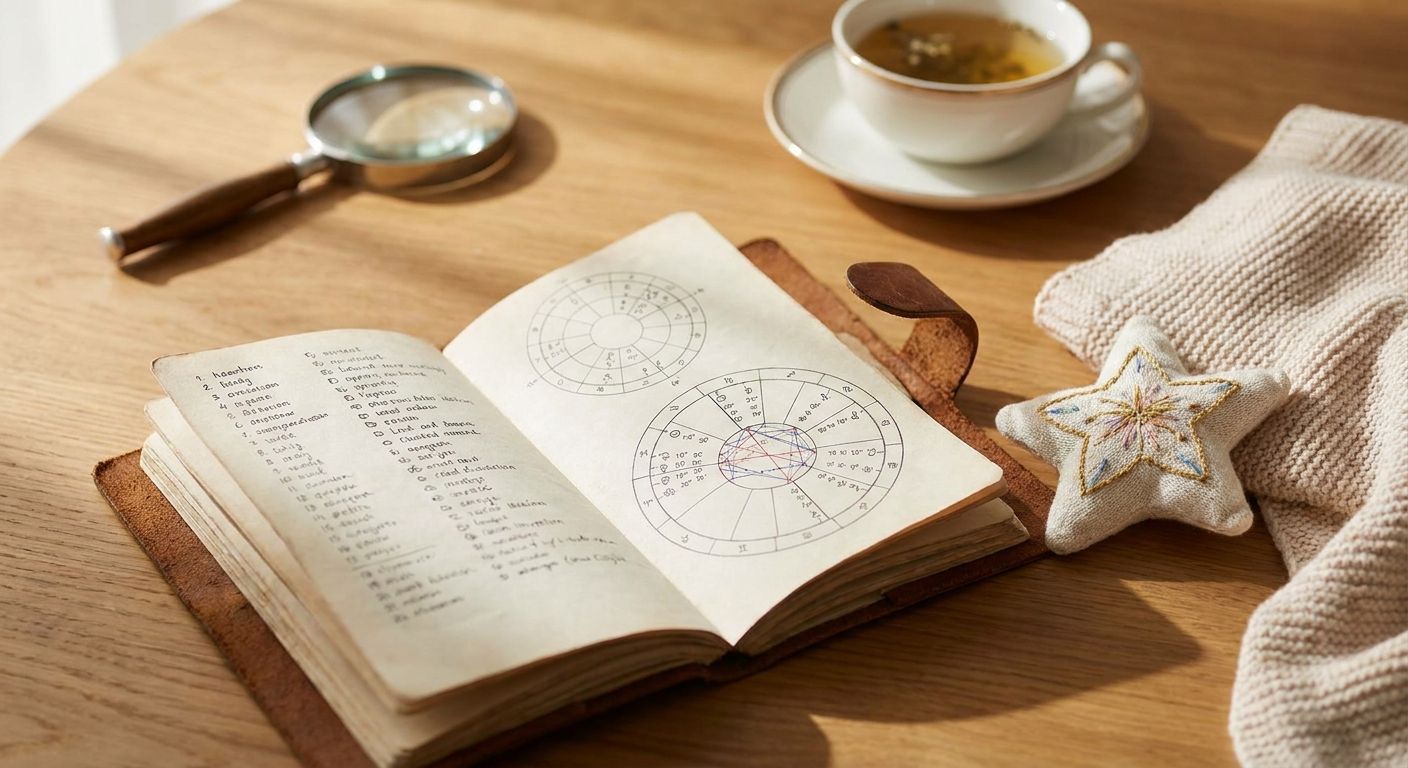
Choosing a baby name using nakshatra means starting from the exact quarter, or pada, of the birth star the Moon occupied at birth rather than picking a letter you simply like. If your child's Moon falls in Ashwini, tradition assigns the pada sounds Chu, Che, Cho and La, not any sound that sounds pretty to you. This guide walks through finding that sound on Wishastro's free astrology tools and using it without turning the naming ceremony into a test you can fail.
TL;DR
- A baby name using nakshatra starts from the birth star's pada, one of 108 sound divisions inside 27 nakshatras.
- If your child's Moon falls in Rohini pada 1, tradition assigns the starting sound O, not any letter you prefer.
- Nakshatra naming works alongside a rashi (moon sign) check, not instead of it, so run both before shortlisting names.
- Unknown birth time makes the pada uncertain, so a kundli reading or an astrologer chat can narrow the sound before you finalize.
Why This Matters
A nakshatra (birth star, one of 27 fixed segments the Moon travels through) reading is a Vedic, sidereal calculation using the Lahiri ayanamsa, the standard adjustment that lines the zodiac up with the actual fixed stars rather than the seasons. A Western tropical calculator will not return the same star placement, so if you are naming by nakshatra, the tool needs to be running the sidereal version.
The appeal of nakshatra naming isn't mystery. It's a rule set: 27 nakshatras, each split into 4 padas, giving 108 sound slots total, and each slot carries a specific starting syllable in Sanskrit. Families have followed this for generations because it gives a defensible answer instead of an argument about whose favorite name wins.
What You'll Need
- The baby's exact birth date, time and place (minutes matter near a pada boundary)
- A nakshatra reading built from those three details, either from a kundli or a dedicated tool
- A shortlist of 5 to 10 names you already like, before you filter by sound
- Patience for family input, since elders often expect the sound rule to be honored even when the final name gets shortened later
- A basic sense of the 108 sound groups, or a chart that lists them, since memorizing all of them isn't realistic
Running the free tool on Wishastro needs no sign-up; saving the chart for later does need an account.
The Steps
1. Lock the Birth Details First
Everything downstream depends on the birth time, so confirm it against a hospital record or birth certificate rather than family memory. A pada shifts roughly every few hours, and a wrong time by even twenty minutes can push the reading into the neighboring pada with a different sound entirely. Common mistake: parents round the time to the nearest hour because that's what they remember, and the pada comes out wrong.
2. Find the Nakshatra and Pada
Once the birth details are set, run them through a kundli matching style chart build to surface the Moon's nakshatra and pada. The nakshatra names the star; the pada narrows it to one of four quarters, each nine degrees wide. Expected outcome: you get one nakshatra and one pada number, nothing more precise than that from a post like this one.
3. Match the Starting Sound
Each of the 108 padas carries one Sanskrit syllable. Krittika's four padas, for example, take the sounds A, I, U and E across its quarters, so two children born in the same nakshatra but different padas can end up with names that don't rhyme at all. Look up the pada's sound on a standard naming chart and treat it as your starting letter or syllable, not a full name.
4. Read the Nakshatra's Character Before You Set a Theme
Beyond the sound, each nakshatra has a traditional ruling deity and a natural character. If your child's Moon falls in Rohini, tradition reads the placement as inclined toward comfort and steady growth, though house placement, aspects and the running dasha (planetary period) all shape how strongly that plays out. Use this only as a loose theme for names, not a verdict on the child.
5. Check the Rashi for a Second Filter
The rashi (moon sign) sits one level above the nakshatra and gives its own name preference in some family traditions, usually the sign's ruling sound rather than the pada's. If the two disagree, most families follow the nakshatra pada as the primary rule and treat the rashi check as a tiebreaker between two names you already like.
6. Weigh Family Tradition Against the Chart
Some households want a name that also honors a grandparent or a family deity, and that name won't always start with the assigned sound. Common mistake: forcing an unrelated name into the sound rule by adding a middle name nobody uses, which defeats the point. A cleaner fix is picking the sound rule for the first name and the family tradition for a middle name.
7. Confirm With a Second Opinion
Before finalizing, it's worth having someone check the pada boundary if the birth time sits close to a shift, since a few minutes either way changes the sound. An astrologer can confirm the reading directly in a private chat; you can talk to an astrologer online if the birth time is uncertain or the pada falls right on a cusp.
Troubleshooting: Common Nakshatra Naming Problems
- Birth time is approximate. A rough time can put the pada, and the sound, in doubt; get the closest documented time and treat the reading as a range rather than a single answer.
- The pada falls right on a boundary. Nakshatras change mid-day, so a birth near a boundary hour needs a tighter time check before you commit to a sound.
- Your favorite name doesn't start with the assigned sound. Keep the name and use it as a middle name, or find a close variant that starts with the right syllable; forcing an unrelated name defeats the exercise.
- Twins share one nakshatra. They can still land in different padas if born even a few minutes apart, so run each birth time separately rather than assuming one reading covers both.
- The assigned sound feels harsh in your language. Sanskrit sounds don't always translate cleanly into every regional spelling; look for a name in your language that opens with the closest matching sound rather than an exact letter.
- Family wants a name from a different tradition entirely. Nakshatra naming is one input, not a rule that overrides every other family custom; many households blend it with a middle name instead of fighting over the first.
Tools and Resources
- A kundli build for the exact nakshatra and pada, covered in the kundli matching guide
- A private chat with an astrologer for boundary cases, explained in how to talk to an astrologer online
- A standard 108 sound reference chart, which most family priests or older relatives already keep
- Wishastro's free astrology tools for exploring the chart without booking anything first
What to Do Next
Once you have the pada and sound, the next real decision is whether nakshatra naming stands alone or gets weighed against the moon sign and any family deity name. That's a conversation worth having with someone who reads charts for a living rather than settling it over a family group chat.
One Last Thing
The four padas inside a single nakshatra rarely share a sound; Krittika alone spans A, I, U and E across its quarters, which is why two children born in the same birth star but a different pada almost never end up with names that rhyme. Treat the sound as a starting point for your shortlist, not the final word on it, since the pada only narrows the field to a handful of workable syllables, and a real conversation with someone reading the actual chart still beats guessing at boundary cases.