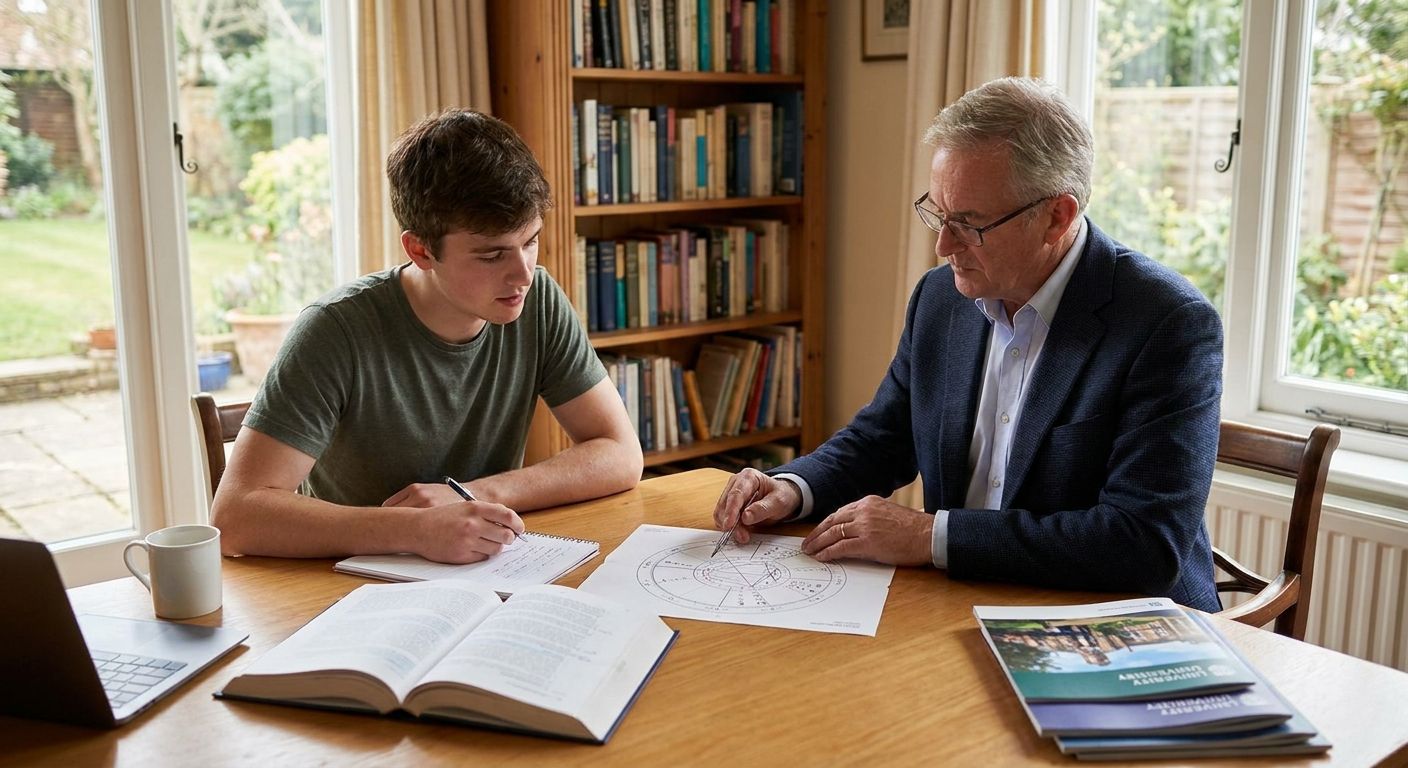
Preparing for UPSC, JEE, NEET, banking, or another competitive exam can make any promise of certainty sound appealing. A birth chart reading may offer a traditional way to reflect on timing, habits, and pressure. It cannot show whether you will pass, which subject you should choose, or whether one attempt will succeed.
TL;DR
- An astrologer may discuss the ascendant, selected houses, planetary periods, and transits as parts of a traditional reading.
- No placement or planetary period proves exam aptitude or predicts a score.
- Birth time matters because it can change the ascendant and house placements used in the reading.
- Choose subjects, coaching, and exam strategy from your performance, interests, official guidance, and qualified educators.
- A useful session states its limits and leaves your study plan in your hands.
Important: Astrology is for guidance and reflection only. It is not a substitute for teachers, academic counselors, evidence-based study methods, or official exam information.
What an astrologer may examine
The chart frame
A Vedic astrology session usually starts by checking the ascendant, house layout, and birth time supplied by the reader. If the birth time is uncertain, the astrologer should explain which parts of the interpretation could change. That is more useful than presenting a precise answer from uncertain inputs.
Some practitioners associate the 5th house with learning and memory and the 9th house with higher study. These are traditional associations, not measures of intelligence or academic ability. They should not be used to rule a subject in or out.
Planetary periods and transits
An astrologer may discuss a mahadasha, antardasha, or transit as a symbolic period with certain themes. Different schools can weigh these factors differently. Mercury, Jupiter, and Saturn are often discussed in education readings, but none of them guarantees a result or creates a fixed timetable for success.
Ask the astrologer to separate the natal chart, which does not change, from current transits, which do. Also ask what part of the answer is a traditional interpretation and what remains uncertain.
Stress, routines, and expectations
A reading can prompt useful questions about routine, confidence, family pressure, or fear of another attempt. Those questions may support reflection, but they are not a diagnosis and should not replace help from a teacher, counselor, doctor, or mental health professional when that help is needed.
Questions worth taking to a session
- Which chart factors are you using, and why?
- Does an uncertain birth time change this interpretation?
- Are you describing a broad theme or claiming a specific outcome?
- What would make you revise your interpretation?
- Can you discuss the chart without telling me which subject, coaching program, or attempt to choose?
The answers should be clear enough that you can tell where tradition ends and practical planning begins.
Claims to treat as red flags
Be cautious if someone guarantees a rank, predicts a pass or failure, names an exact result date, or says a remedy can replace study. The same applies to claims that a nakshatra proves you are verbal, quantitative, or suited to a particular course. Those statements turn a reflective practice into an unsupported aptitude test.
Pressure to book because an exam is close is another warning sign. The value of a session should come from the quality of the explanation, not from a countdown or fear that a window will disappear.
Keep the practical plan first
Use mock-test scores, syllabus coverage, past papers, sleep, health, and feedback from qualified educators to shape preparation. Check dates and rules on the examination authority's official website. If a chart reading helps you think about patience or routine, keep it alongside that evidence rather than above it.
If you want a traditional reading after setting those boundaries, use the career consultation page and tell the astrologer that you do not want a pass or fail prediction. Readers who are unsure about birth time can first review how an ascendant is calculated.
A grounded way to use the session
Leave with notes about the factors discussed, the limits the astrologer stated, and any reflective question that felt useful. Your next practical step should still come from the study plan, not from a predicted result.