Gemstones for anxiety appear in many Jyotish recommendations, most often through the Moon, Mercury, Rahu or Saturn. That describes a traditional belief system. It does not establish that a planet caused your symptoms or that wearing a stone will relieve them. No gemstone has been shown to treat an anxiety disorder.
This article is for guidance and reflection, not a substitute for professional medical or mental health advice, diagnosis or treatment. If anxiety is disrupting sleep, work or daily life, speak with a qualified healthcare or mental health professional.
TL;DR
- No gemstone has been shown to diagnose, prevent or treat anxiety.
- Jyotish traditionally links Pearl with the Moon and Emerald with Mercury, but practitioners do not use one symptom-only rule.
- Hessonite belongs to Rahu and Blue Sapphire belongs to Saturn in the navaratna system; neither is a general calming stone.
- A gemstone trial is a ritual custom, not a clinical safety or efficacy test.
- A gem report can identify the material and detectable treatments, but it cannot certify a mental health or astrological effect.
How Jyotish approaches the question
In Jyotish, Pearl is associated with the Moon, Emerald with Mercury, Hessonite with Rahu and Blue Sapphire with Saturn. Practitioners may examine lagna, house rulership, planetary strength, aspects and the current dasha before recommending any gem. Different schools weigh those factors differently.
That method is not the same as matching a symptom to a stone. Sleeplessness does not prove that the Moon is weak, and repetitive worry does not diagnose a Mercury problem. A birth chart can show the placements used in an astrological reading, but it cannot diagnose anxiety.
What the popular stones mean in tradition
Pearl (Moti) and the Moon
Pearl is the Moon's classical navaratna. Because Jyotish associates the Moon with manas, a Sanskrit term often translated as mind or feeling, Pearl frequently appears in advice about emotional steadiness. This is symbolic and interpretive; Pearl has not been shown to calm the nervous system or improve sleep.
Emerald (Panna) and Mercury
Emerald is linked with Mercury, the graha associated with speech, learning and analysis. Some practitioners recommend it when a chart reading centers on Mercury. That does not make Emerald a treatment for rumination, panic or difficulty concentrating.
Hessonite (Gomed) and Rahu
Hessonite is Rahu's traditional stone. It is sometimes suggested when a practitioner interprets Rahu as prominent in a chart, but it is not a general-purpose stone for mental peace. Claims that it stops intrusive thoughts or fear go beyond established evidence.
Blue Sapphire (Neelam) and Saturn
Blue Sapphire belongs to Saturn in the navaratna system. It has a strong reputation in gemstone folklore, including claims about fast or unpleasant reactions. Those stories do not prove that a stone changed someone's mood or circumstances. Some astrologers recommend trial wear as a ritual precaution; a trial cannot test medical safety or astrological efficacy.
Amethyst, Rose Quartz and other crystals
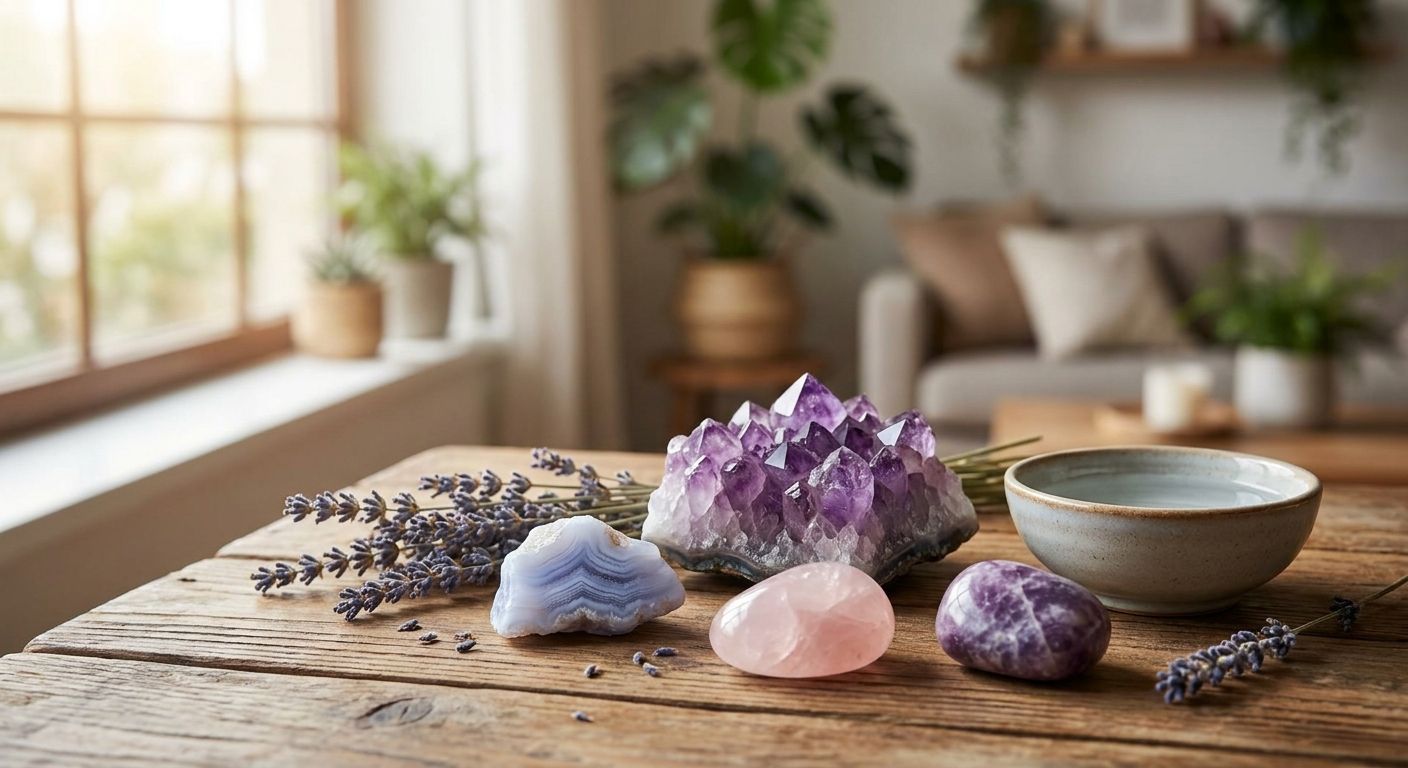
Amethyst and Rose Quartz appear often in modern crystal-wellness lists, but they are not direct replacements for Pearl or Emerald in the classical navaratna mapping. You may value one as jewellery, a family object or a cue for a calming routine. Keep that personal meaning separate from a health claim.
What to ask before buying
Start with the reason for the recommendation. A responsible explanation should name the chart factor and acknowledge that the method is traditional. Be wary of anyone who diagnoses anxiety from a short conversation, promises relief, or pressures you to stop treatment.
Then check the stone itself. An independent gemological report may identify whether a stone is natural or laboratory-grown and disclose treatments that the laboratory can detect. It cannot measure planetary energy, predict how you will feel or prove that an untreated stone works better for anxiety.
Price deserves the same caution. There is no evidence-based carat dose for mental peace, and body-weight formulas are not medical dosing. Set a budget before speaking with a seller, ask about returns, and compare the report number with the issuing laboratory's records when possible.
Wearing a stone safely
The physical risks are ordinary jewellery risks. Nickel and some metal alloys can irritate skin; a loose setting can scratch or drop a stone. Remove jewellery that causes a rash, swelling or pain, and seek appropriate care if the reaction persists.
Do not use a change in anxiety, sleep or mood as proof that a stone suits or rejects your chart. Symptoms fluctuate for many reasons. If they worsen, contact the clinician who supports your care rather than adjusting medication or treatment around a gemstone.
What to avoid
- A seller who calls a gemstone a cure for anxiety, depression or panic.
- Advice based only on your symptom, birth month, favourite colour or rashi.
- Claims that a three-day trial can prove safety or effectiveness.
- A certificate presented as evidence of spiritual or mental health effects.
- Instructions to delay therapy, stop medication or replace clinical care.
A more useful way to think about it
A gemstone can be a ritual object without becoming medicine. If wearing Pearl reminds you to pause before reacting, the pause may matter to you; the claim should stop there. Jyotish can supply a symbolic framework, while a licensed professional handles diagnosis and treatment.
If you choose to consult an astrologer, take your birth details and ask which placement supports the recommendation, what other factors were checked, and how confident the interpretation is. You can also use Wishastro's Lagna Chart tool to see the chart structure being discussed.
Check the chart before choosing a stone
Ask an astrologer to explain the traditional chart factors without treating a gem as mental health care.